English
  Español
  Deutsch
 Mosquitoes do not keep the same schedule as the people trying to sleep. Activity often rises after dark, when rooms are dim and attention is low. A person lying in bed may hear a faint whine near the ear but see nothing when looking toward the sound. Turning on a main light helps for a moment, but it also wakes anyone else in the room and makes it harder to settle back down afterward.
This is the situation where a small, focused light source becomes useful. An LED mosquito racket builds illumination into a handheld device already meant for insect control. The light does not flood the room. It shines forward from the handle or frame, revealing what the eye cannot pick out in the dark.
What a Standard Mosquito Racket Does
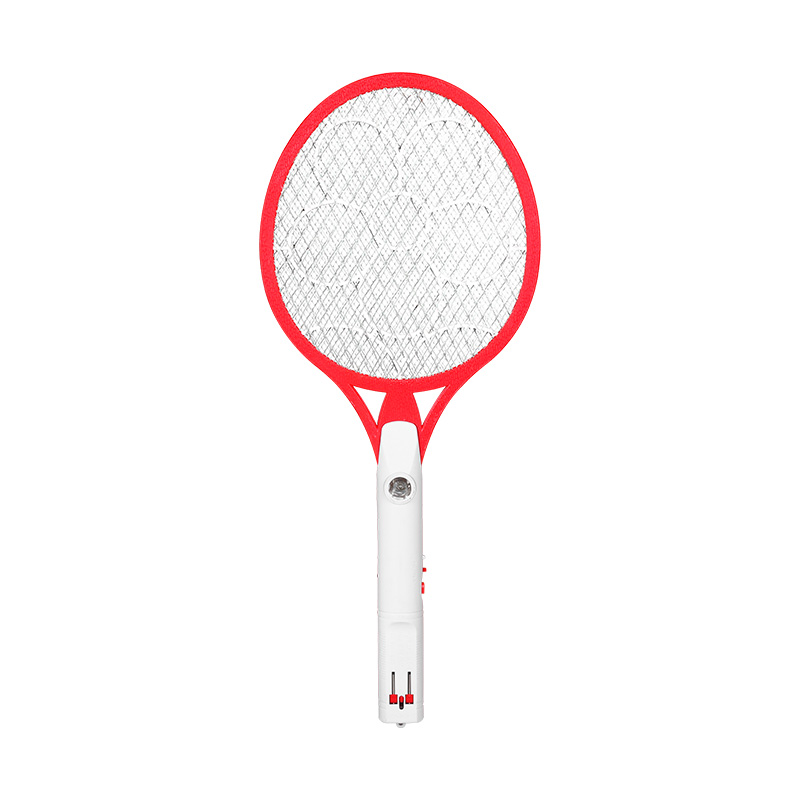
A standard racket is a handheld tool with a conductive mesh stretched across a frame. When an insect touches the mesh, a charge delivers a brief shock. Power comes from internal batteries or a rechargeable cell, and the device is swung by hand toward a target.
Its function depends on the user knowing where the target is. In daylight or a well-lit room, that is not a problem. The insect is visible against the background, and the swing follows the eye. After dark, the situation changes. The user may hear the insect but cannot see it. A swing in the direction of a sound often misses, and the insect moves on.
Some users turn on a room light to locate the insect, then swing. That works, but it interrupts sleep and affects anyone else in the space. Others rely on sound alone, which provides direction but not distance or height. The limitations become clear when the room is dark and the insect is somewhere other than where the sound seemed to come from.
How an LED Mosquito Racket Differs
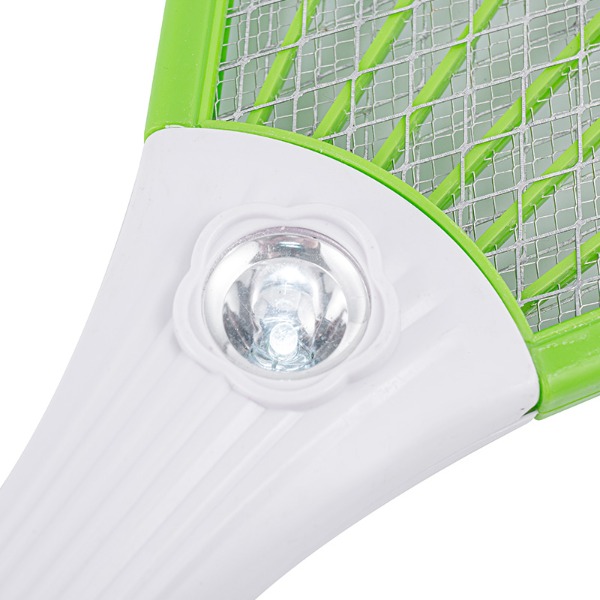
An LED-equipped racket adds a light source to the same basic form. The light sits in the handle or along the frame, directed toward the area ahead of the mesh. When the device is held and pointed, the beam illuminates what the mesh is about to encounter.
The two functions share a power supply in rechargeable designs. The light can be used on its own, the mesh can be charged without the light, or both can operate together. The physical shape remains close to that of a standard racket, so handling does not change much.
For nighttime use, the arrangement solves a specific problem. The user can scan a wall or ceiling with the light, spot an insect, and swing at it without turning on overhead lighting. The light follows the direction of the swing, which keeps the target illuminated through the motion.
An Electric Fly Swatter With Light takes this combination further by treating the light as a core feature rather than an add-on. The result is a single device that covers both locating and eliminating the insect, rather than requiring two separate tools or a room light.
Why Visibility Matters After Dark
Sight is the primary sense for locating a small moving object. In the dark, that advantage disappears.
Sound provides some information. The whine of a mosquito indicates that one is nearby, and the volume suggests roughly how close. But sound does not reveal height, exact direction, or whether the insect has moved since the last pass. A swing based on sound alone is a guess.
Turning on a room light solves the visibility problem but creates others. The sudden brightness disrupts sleep for anyone in the room. It also gives the insect a chance to move while the user's eyes adjust. By the time the room is lit and the insect located, it may have settled somewhere out of reach.
A focused light source avoids these issues. Pointing a narrow beam at a wall or ceiling reveals insects without lighting the whole room. The contrast between the insect and the surface behind it makes detection easier. The user can search a specific area, find the target, and act without disturbing the rest of the space.
The light also helps with insects that have settled. A mosquito resting on a wall or ceiling is stationary and easier to approach than one in flight. Finding it requires illumination, and a directed beam provides exactly that.
Situations Where the Light Function Helps
Several settings make the light function more useful.
- Bedrooms during sleeping hours: the light allows a search without waking others or disrupting sleep
- Camping tents and outdoor sleeping areas: ambient light is limited, and a focused beam helps locate insects in enclosed spaces
- Rooms with minimal ambient lighting: hallways, basements, and rooms used at night without overhead lights
- Areas where overhead lights would wake others: shared rooms, children's bedrooms, and spaces where others are resting
- Spaces with dark corners or furniture shadows: places where insects settle out of general view
- Walls and ceilings: surfaces where insects rest and can be approached once spotted
Each of these situations shares a common element: the need to see without illuminating the entire space. A directed light serves that need in a way that a room light does not.
| Approach | How It Works | Limitation |
|---|---|---|
| Room light plus standard racket | Illuminates the space to find insects | Disrupts sleep, affects others |
| Sound-directed swing | Uses hearing to estimate location | No visual confirmation, misses common |
| Chemical sprays or coils | Residual or airborne action | Odor, chemical exposure, timing |
| Plug-in devices | Stationary attraction or repellent | Limited to one area |
| Phone flashlight | Separate light source | Occupies a hand, not designed for the task |
| LED mosquito racket | Combines light and mesh in one tool | Depends on battery charge |
Practical Considerations for Nighttime Use
Using an LED racket after dark involves details that affect how well it works.
Light brightness matters in two directions. Enough light to reveal an insect against a wall is necessary. Too much light, particularly if it points back toward the user, affects night vision and makes it harder to see afterward. A moderate beam directed forward serves the purpose without washing out the surroundings.
Beam direction should align with the mesh. A light that points off to one side leaves the target area dim. A beam that follows the swing keeps the insect illuminated through the motion, which helps with timing.
Battery consumption increases when the light runs alongside the mesh. A device used for extended searches with the light on will need charging sooner than one used briefly. Keeping the device charged and ready means it works when needed rather than running down mid-search.
Weight and balance affect how the device handles during a swing. A heavier handle shifts the balance, which changes how quickly the mesh moves through the air. Familiarity with the device helps, and a design that keeps the weight near the hand supports control.
Noise from the swing and the mesh is part of the process. A quiet approach reduces the chance of startling the insect before contact. Some devices produce a faint sound when charged, which is normal.
Charging routines determine readiness. A device left uncharged when needed is not useful. Keeping it on a charging stand or plugging it in after use maintains readiness without requiring attention.
Storage location affects access at night. A racket kept near the bed is easier to reach than one stored in another room. Placement within reach reduces the time between noticing an insect and acting on it.
How It Compares with Other Nighttime Approaches
Several methods exist for dealing with insects after dark, and each has a different profile.
Room sprays and coils work through chemical action. They affect an area rather than a specific insect, and they leave residual odor or particles in the air. Some people prefer to avoid that in sleeping spaces.
Plug-in devices attract or repel insects within a limited range. They operate continuously but are stationary, so an insect in another part of the room may not be affected.
Bed nets prevent insects from reaching a sleeping person. They are preventive rather than responsive — the insect remains in the room, just outside the net.
Standard rackets without light require the user to see the insect or locate it by sound. After dark, that becomes a limitation.
Phone flashlights provide light but occupy a hand and are not designed for the task. Using one alongside a racket means juggling two objects.
A combined device reduces the number of items needed. One tool covers both locating and eliminating the insect. For nighttime use, that consolidation simplifies the process and reduces the chance of fumbling in the dark.
Factors That Affect Effectiveness
How well the device performs depends on conditions and technique.
- Insect activity patterns: some insects fly in open areas, others settle on surfaces
- Mesh voltage and contact time: the charge must reach the insect for enough time to act
- Approach speed and angle: a steady approach with the mesh aligned works better than a rushed swing
- Light placement relative to the mesh: illumination that covers the target area supports accurate contact
- Condition of the mesh surface: bent wires or debris reduce the conductive area
- Battery charge level: low charge reduces both light output and mesh performance
- Air movement: fans and open windows can push insects off course or move them out of range
These factors interact. A charged device with a clear mesh and a steady approach works under conditions that a depleted device with a damaged mesh cannot handle. Attention to each factor improves the result.
Maintenance and Long-Term Use
Keeping the device in working order involves routine care.
- Cleaning the mesh after contact removes debris that could reduce conductivity
- Checking for bent or damaged wires identifies areas that need attention or replacement
- Managing charge cycles keeps the battery in condition and the device ready
- Storing in a dry location prevents corrosion on the mesh and internal components
- Handling the mesh safely when not in use avoids accidental contact
- Noting signs of decline such as reduced light output or weaker mesh response
Replacement becomes necessary when the mesh is damaged beyond simple correction, when the battery no longer holds a charge, or when the light fails. These signs appear over time, and addressing them keeps the device functional.
How Light Adds Function at Night
An LED Mosquito Racket combines illumination with insect control in a single handheld tool. The light addresses the visibility problem that nighttime creates, allowing a search without turning on room lights or disturbing others.
An Electric Fly Swatter With Light reduces the number of items needed during a nighttime search. One device covers locating the insect and acting on it, which simplifies the process when the room is dark.
Effectiveness depends on conditions and technique. Light brightness, beam direction, mesh condition, battery charge, and approach all influence the outcome. Maintaining the device and keeping it ready supports consistent performance.
Matching the tool to the environment where it is used keeps the task manageable. A device with a light source fits nighttime conditions in a way that a standard racket does not. For the hours when insects are active and the room is dark, that combination addresses the situation directly.