English
 Español
 Deutsch
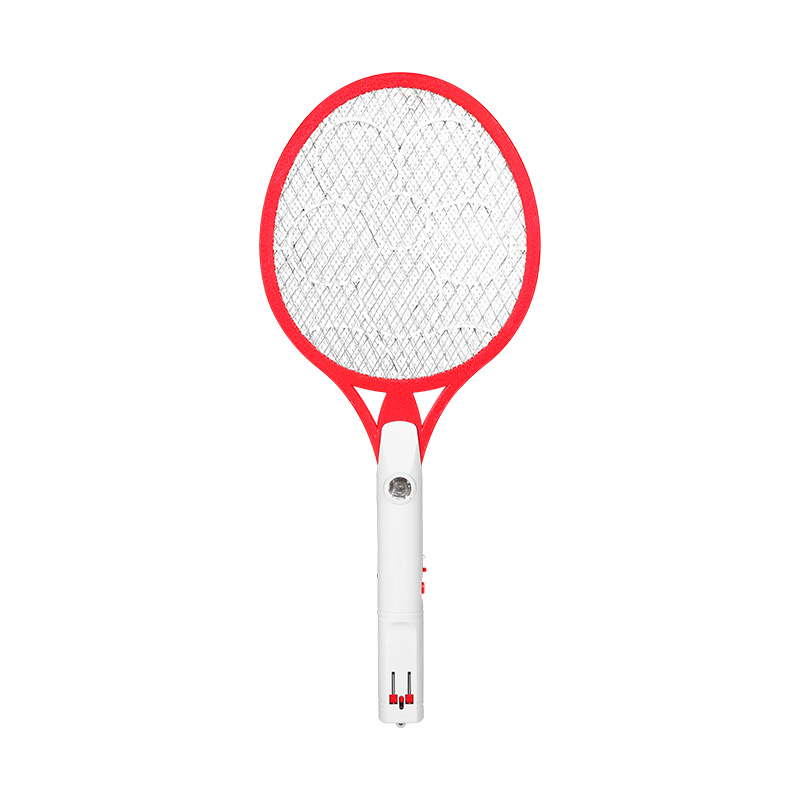
A bedroom goes dark, the first whine sounds near the pillow, and the mosquito vanishes against a dark wall. Many households keep an Electric Mosquito Racket nearby for moments like this, and some models add a built-in light. The question is whether an LED Mosquito Racket draws mosquitoes toward it or simply helps the user see.
The answer depends on how the device is designed and how mosquitoes respond to light. LED illumination can make flying insects easier to spot in dim rooms, yet light alone does not guarantee that a mosquito will approach. Separating attraction, visibility, and electric killing makes it easier to choose a racket that fits a daily routine.
Do LED Lights Attract Mosquitoes?
Light influences insect movement, but mosquitoes do not react to every light source in the same way. Their behavior responds to a mix of signals, including light, warmth, carbon dioxide, and body odor. This is why a mosquito often keeps circling a person instead of heading for a nearby lamp.
Color and wavelength matter. Some flying insects respond to certain wavelengths, and others show little interest.
- Blue or violet light may attract some flying insects under particular conditions.
- Ultraviolet light is used in certain insect traps, although its effect on mosquitoes varies.
- Warm household lighting gives visibility without acting as a lure.
- An LED on a handheld racket usually serves to light up the surroundings.
Mosquitoes also locate hosts through breath, body heat, skin odor, and visual cues. Switching on a lamp does not necessarily pull a mosquito away from a sleeping person, so expectations should stay realistic.
How Does LED Mosquito Attraction Work?
An LED can provide illumination or, in some designs, form part of an attraction system. A handheld racket and an automatic light trap are different products, and their methods should not be confused. The racket relies on the user to approach the insect and make contact with an electrified grid. A trap sits in one place and uses attractants plus a capture mechanism.
| Feature | LED Mosquito Racket | Automatic Light Trap |
|---|---|---|
| Operation | Handheld | Stationary |
| Main function | Electric contact with mosquitoes | Attracting and capturing insects |
| Purpose of the LED | Often assists visibility | May contribute to attraction |
| User involvement | Requires movement | Usually fixed in place |
| Upkeep | Grid and exterior cleaning | Cleaning the collection area |
The practical benefit of an LED on a racket is visibility. Mosquitoes are hard to follow near dark furniture, curtains, or bedroom corners, and a built-in light can help the user locate movement. The light should not block the view, should suit the room, and should have controls that are easy to reach. Its role is to assist the user, and it does not by itself prove that the product attracts insects.
How Does an Electric Mosquito Racket Work?
An Electric Mosquito Racket uses an electrified mesh. When a mosquito touches the active grid, the discharge can kill it. The racket does not need to pull insects across the room, because the user brings the grid to the target. That makes it suitable for a single mosquito in a bedroom or kitchen.
A typical sequence looks like this:
- Inspect the racket for visible damage and read the manufacturer's instructions.
- Activate the grid with the designated control.
- Move toward the insect carefully.
- Let the insect touch the active grid.
- Switch the device off before cleaning it as instructed.
The grid is the central component. Points to compare include mesh construction and protective layers, activation controls, handle insulation and grip, outer protection against accidental contact, and cleaning needs.
LED Mosquito Racket or Traditional Racket: Which Fits?
An LED feature adds convenience, but it is not evidence of stronger attraction or stronger killing performance.
| Comparison | LED Mosquito Racket | Traditional Electric Racket |
|---|---|---|
| Electric killing function | Yes, depending on design | Yes |
| Extra illumination | On equipped models | Not always available |
| Dim rooms | May improve visibility | Depends on room light |
| Operation | Handheld | Handheld |
| Power | Depends on model | Depends on model |
| Other features | Varies | Varies |
Picture a mosquito landing near the bed after the lights are off. Finding it behind a cabinet or along a dark wall can take time, and a built-in light can show the area while the user prepares to swing. The same applies to bedrooms with little night lighting, rooms with shaded corners, and homes where an integrated light is preferred. The benefit comes from seeing better, not from the light calling mosquitoes in.
A traditional racket remains practical. In a well-lit room, extra illumination adds little, and grid quality, handle design, controls, and build may matter more.
What Should Be Checked Before Buying?
Appearance can catch the eye, but details decide whether a racket suits a household.
Grid
Look for protective layers and clearly written operating instructions. An outer mesh reduces accidental contact with the active parts.
LED Purpose
The light should make use easier, not add complexity. Check that it sits conveniently, suits indoor conditions, has clear controls, and that the product description states what the light is meant to do.
Power
A rechargeable model reduces the need for disposable batteries, while a battery-operated one suits people who prefer that arrangement. The specifications should list charging instructions, battery capacity, and charging time.
Handling
Grip shape, weight balance, control placement, storage, and exterior materials all affect comfort when moving around furniture.
How Can a Racket Be Used More Effectively?
A suitable device is only part of the solution. The surroundings affect how often mosquitoes come indoors.
Improve Visibility
Make sure the area is visible before swinging. An LED model helps in dim rooms, while ordinary lighting is enough elsewhere. Avoid swinging blindly around people, pets, or fragile objects.
Check Hiding Places
Mosquitoes rest in quiet, shaded spots such as behind curtains, under furniture, near indoor plants, around doors and windows, and in darker corners of bedrooms and bathrooms.
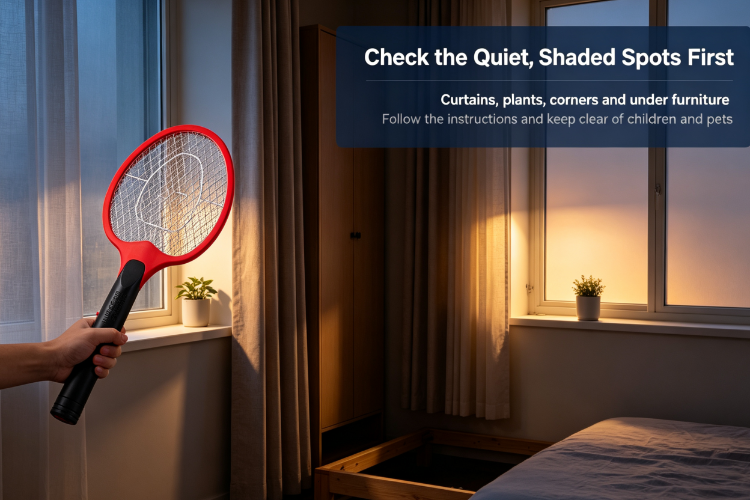
Follow the Instructions
Keep the racket away from water, children, and pets during use. Do not touch the active grid or use it near flammable materials. Switch it off afterward and follow the cleaning and storage guidance.
Reduce Entry
A racket deals with mosquitoes already inside and does not stop new ones arriving. Repairing damaged screens, closing doors when practical, emptying standing water, cleaning plant saucers, and checking damp, shaded areas around the home address the conditions that let mosquitoes enter and breed.
Is an LED Mosquito Racket Worth Buying?
It makes sense for people who often deal with mosquitoes after turning off the lights, want extra illumination while locating insects, or prefer lighting and electric functions in one handheld device.
A standard Electric Mosquito Racket may be enough for those who mainly use it in bright rooms, want a simple function, or do not care about added lighting. The decision should rest on household needs and the product specifications.
How Can Buyers Compare Products Clearly?
Useful comparison points include how the grid and controls operate, whether the LED supports the intended use, grip, weight, and control layout, protective construction and operating instructions, and cleaning, charging, and storage recommendations. Claims about strong attraction deserve caution, and construction and specifications give a more reliable picture.
Readers considering an Electric Mosquito Racket or LED Mosquito Racket are welcome to review the product features, lighting design, and safety instructions, then choose the functions that suit their space and daily routine.