English
  Español
  Deutsch
 Cooling fans may serve a similar purpose while offering very different ways of use. A Mini Handheld Cooling Fan is designed around movement, close-range airflow, and direct operation by hand. Traditional fans usually stay in one place, with a base or support keeping the unit in a fixed position.
Daily surroundings can make the difference easier to notice. A person working at a desk may prefer a fan that stays beside the workspace, while someone moving between rooms may need cooling without carrying a larger appliance. Outdoor activities also create situations where a fixed power connection or a stable surface is not always available.
Product comparison therefore involves more than airflow alone. Size, weight, power supply, control position, grip shape, and operating distance all affect how a fan fits into daily use. A compact fan may serve a narrow area around the body, while a traditional fan can provide airflow across a larger fixed space.
Different structures also lead to different storage habits. A handheld unit can be placed in a drawer, bag, or small storage area after use. A standing or desk fan normally needs a suitable surface or floor space. Neither arrangement applies to every situation, so the intended setting remains an important part of comparison.
How Does a Mini Handheld Fan Differ in Physical Design?
Physical design is one of the clearest differences between a handheld fan and a traditional fan. A Mini Handheld Fan usually combines the motor, fan housing, controls, power source, and grip into a compact body. Traditional designs often separate the airflow section from a base, stand, or adjustable support.
A handheld structure needs to remain comfortable during movement. Grip length, body thickness, surface shape, and overall balance can influence how long the fan feels comfortable to hold. A poorly balanced body may place extra pressure on one part of the hand, especially when the fan is held at an angle.
Traditional fans have a different structural task. A base needs enough contact with the supporting surface to keep the fan in place. A stand may also allow the airflow section to change direction without requiring the whole unit to move. Such arrangements make fixed-position cooling easier to manage.
Storage creates another distinction. Compact housing can reduce the amount of space required after use, while a stand or base naturally adds to the footprint. Foldable structures can narrow the gap between portable and fixed designs, although folding parts also add more areas that need careful assembly.
| Design Point | Mini Handheld Cooling Fan | Traditional Fan |
| Main support | Hand or compact grip | Base or stand |
| Airflow position | Moved with the hand | Usually stays in one location |
| Storage | Easy to place in small spaces | Requires a suitable surface or floor area |
| Direction control | Changed by hand position | Often adjusted through the support structure |
| Daily handling | Designed around carrying and holding | Designed around fixed placement |
How Does Airflow Delivery Differ Between the Two Fan Types?
Airflow feels different when the fan is held close to the body compared with a fan placed across a room. A Mini Handheld Fan directs air toward a selected area, and the cooling position can change as the hand moves. Such use can be useful during desk work, commuting, walking, or short periods of outdoor activity.
Traditional fans generally send air from a fixed position. A wider airflow area can be created through the fan head, stand position, or oscillating movement. Cooling can therefore reach a larger part of a room without requiring the fan itself to be carried.
Fan shape also affects how air leaves the housing. Openings around the front, blade placement, and the distance between internal parts can influence the direction and feel of airflow. Compact housing leaves less room for internal arrangement, making the relationship between the fan blade, outer shell, and air outlet important during design.
Handheld use adds another consideration. Airflow direction changes whenever the hand changes position, so the body needs to remain easy to orient. A comfortable grip can make small angle adjustments feel natural during use.
Traditional fans place less attention on hand movement because the support carries the weight. Position can remain unchanged for a longer period, allowing airflow to continue toward a selected area while other activities take place nearby.
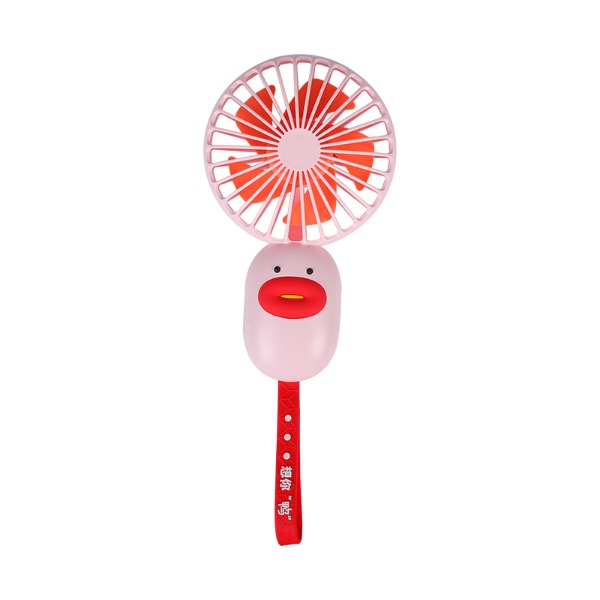
What Changes When Cooling Moves From a Fixed Position to the Hand?
Moving a cooling fan from a table or floor to the hand changes the entire interaction with the product. Cooling becomes closely connected with body movement, rather than depending on a fixed location.
A handheld fan may follow movement around a room or move together with outdoor activity. Airflow can also be redirected toward the face, neck, hands, or another nearby area without moving a base. Such flexibility comes with a need for steady handling.
Several small design details become important:
- Grip position: A natural holding area can make repeated use less tiring.
- Control placement: Buttons should remain reachable without changing the grip unnecessarily.
- Body balance: Weight needs to be distributed in a way that keeps the fan stable during movement.
- Air outlet direction: The front opening should work naturally with common holding angles.
Traditional fans approach the same task differently. A stable base keeps the unit in place, while airflow direction can be adjusted through the fan head or support. Once positioned, little physical handling may be required.
For product designers, the change from fixed placement to handheld use is therefore not simply a matter of making a traditional fan smaller. A Mini Handheld Cooling Fan needs a structure built around grip, movement, controls, airflow direction, and portable storage. Each part affects the way the finished product feels during ordinary use.
How Do Power and Charging Methods Affect Daily Use?
Power supply changes the way a fan fits into everyday routines. A Mini Handheld Fan commonly relies on an internal rechargeable power source, allowing operation without staying beside a wall outlet. Such a design suits movement between different places, especially when cooling is needed for a short period away from a fixed desk or room.
Portable power also affects the internal arrangement of the product. A small body needs to accommodate the power source together with the motor, fan section, controls, and charging connection. Space inside the housing is limited, so component placement needs to support both balance and safe assembly.
Charging access is another practical detail. A charging port placed in an easy-to-reach position can make regular charging less troublesome. Port protection also matters because portable products may be placed in bags, drawers, or other storage areas where dust and small particles can collect.
Traditional fans usually depend on a direct connection to household power. Continuous operation becomes easier when a suitable outlet is nearby, while movement is limited by the cable length and available socket position. A fixed fan can remain in one place for extended cooling without needing to be carried.
| Power Arrangement | Mini Handheld Cooling Fan | Traditional Fan |
| Main power source | Rechargeable internal power source | Household power connection |
| Movement | Suitable for changing locations | Usually tied to an outlet |
| Charging | Requires charging between uses | No separate charging step |
| Internal space | Power source shares compact housing | More room may be available for separate components |
| Storage | Can be stored away from the power connection | Often kept near the regular operating position |
How Should Noise and Operating Comfort Be Compared?
Noise becomes easier to notice when a fan is used close to the body. A Mini Handheld Fan may operate near the face, neck, or hands, making the sound of the rotating fan section more noticeable than when a traditional fan is placed farther away.
Compact housing can also influence the way operating sound is perceived. Internal parts sit close together, while the outer shell surrounds the moving section. Good assembly and stable positioning of internal components can help avoid unnecessary rattling during operation.
Hand contact adds another part to the comfort experience. Small vibrations can travel from the motor area through the housing into the grip. A stable body shape and suitable grip surface can make the product feel more controlled during use.
Traditional fans have a different relationship with the surrounding space. Greater distance between the fan and the body may make operating sound less noticeable during normal household use. A stable base also separates much of the product movement from the hand.
Comfort therefore needs to be considered according to the way a fan is operated. A portable unit needs attention to grip, vibration, button position, and sound close to the body. A fixed fan places more attention on stable placement and comfortable operation from a nearby position.
What Should Mini Fan Manufacturers Consider During Design?
Mini Fan Manufacturers need to consider several parts together when developing a compact handheld product. Reducing the outer size alone does not automatically create a comfortable fan. A smaller housing still needs enough internal space for the moving parts, power source, controls, and structural supports.
Grip design should match the natural position of the hand. A handle that is too narrow may feel less stable, while an overly thick body can make repeated holding uncomfortable. Balance also matters because the position of internal parts can change how the product feels during movement.
Control placement deserves similar attention. Buttons should be easy to reach without forcing the hand into an unusual position. Charging connections need to remain accessible, while openings and joints should fit the overall housing design.
Assembly can influence daily operation as well. Parts that fit together consistently can help maintain a stable housing structure. Loose connections may create unwanted movement or sound, while uneven assembly can affect the appearance and feel of the finished product.
Mini Fan Manufacturers may therefore review areas such as:
- Housing shape and grip position
- Internal component arrangement
- Fan section and air outlet position
- Button and charging port placement
- Assembly fit between connected parts
- Storage and handling requirements
Such checks connect manufacturing decisions with ordinary product use rather than treating each component as a separate part.
How Can the Two Fan Types Match Different Cooling Needs?
A handheld fan and a traditional fan often fit different routines. A Mini Handheld Fan can suit situations where cooling needs to move with the body. Desk work, commuting, waiting outdoors, walking, or moving between rooms may call for a portable form that does not depend on a fixed surface.
Traditional fans tend to fit spaces where cooling remains in one location. A bedroom, office, living area, or work corner can have a selected position for regular airflow. Once placed, the fan can continue operating without requiring repeated handling.
The surrounding environment also changes the practical choice. A portable fan needs convenient storage and easy carrying. A traditional fan needs enough room for a base or stand and a nearby power connection.
Neither design needs to replace the other in every situation. Product selection can instead follow several simple considerations:
- Movement: Frequent movement favors a portable structure.
- Cooling area: A fixed space may suit a stationary fan.
- Power access: Areas without convenient outlets can benefit from rechargeable operation.
- Storage: Small storage spaces may suit compact handheld products.
- Operating method: Direct hand control differs from fixed-position operation.
Viewing the two types through actual usage makes comparison more useful than judging size or airflow alone.
Why Does the Whole Product Structure Matter in Fan Comparison?
A fan works as a group of connected parts. Housing size affects internal space, internal placement affects balance, and balance influences handling. Air outlet position also needs to work with the way the product is held or supported.
For a Mini Handheld Cooling Fan, portable use connects several design choices at once. Grip shape, power arrangement, control position, airflow direction, and storage all contribute to the daily experience. Changing one part can create a need to adjust another part.
Traditional fans follow a different structural path. Base stability, stand height, fan-head movement, power connection, and placement space work together around fixed operation. Cooling performance cannot be separated entirely from the support structure.
Mini Fan Manufacturers therefore need to view product design as a complete arrangement. A compact body may save storage space, while comfortable handling depends on how the available space is divided inside and outside the housing. Portable cooling also depends on practical charging and safe storage between uses.
Comparing a Mini Handheld Cooling Fan with a traditional fan becomes clearer when the whole operating process is considered. One design follows the movement of the hand, while the other normally remains connected to a selected location. Differences in structure, power, airflow direction, handling, and storage shape the way each type fits into everyday cooling needs.