English
 Español
 Deutsch
A mosquito circling the sofa at 9 p.m. has a way of ruining a quiet evening. You can grab the old swatter by the door, or you can reach for a Rechargeable Electric Mosquito Swatter that sits on a charging shelf. Both tools kill by direct contact, yet they feel very different in the hand. Power, cleanup, storage and safety all work differently, and those details matter more than the sales pitch.
What an Electric Racket Actually Is
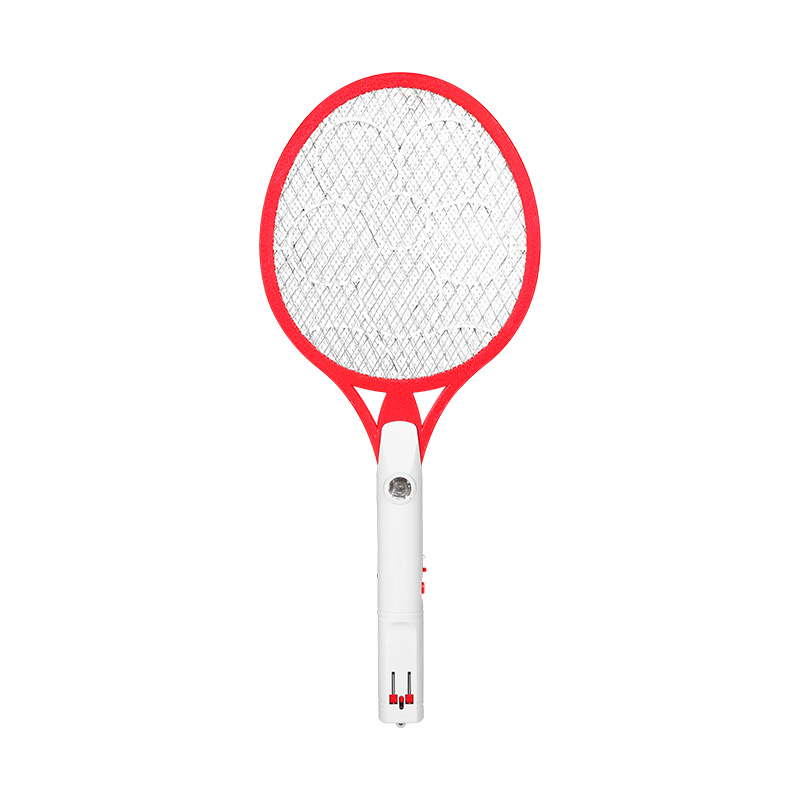
An electric racket is a handheld tool with a racket-shaped head, an insulated handle, a power switch and a protective grid around an energized inner mesh. When a mosquito or fly touches the live mesh, the electrical discharge kills it. A traditional swatter relies on a hard swing, while the electric version relies on contact with the mesh.
Most current designs have a built-in rechargeable battery and a charging port, so you are not hunting for spare cells. A typical Electric Mosquito Racket is light enough to swing one-handed for a while without tiring your wrist.
It is still an active tool. You have to spot the insect, move toward it and swing. It does not repel anything, and it will not protect a room while you sleep.
How a Traditional Swatter Works
The classic swatter is a flat head on a handle, made of plastic, rubber or mesh. You swing, the head meets the insect, and that is it. It needs no charging and works the second you pick it up, which is why it has survived for decades.
The weak point is timing. Mosquitoes change direction in a blink, so a late swing often misses and sends the insect somewhere else in the room. A hit can also leave a smear on a wall or window, which means wiping up afterward.
Side-by-Side Comparison
| Factor | Electric racket | Traditional swatter |
|---|---|---|
| How it kills | Electrified mesh | Physical impact |
| Power | Rechargeable or battery | None needed |
| Ready to use | Only if charged | Always |
| Cleanup | Mesh needs careful cleaning | Head and wall surface get messy |
| Upkeep | Charging, mesh checks | Occasional wiping |
| Carrying | Depends on size and battery | Usually easy |
How Each One Handles the Insect
A swatter needs the head to land squarely with enough force. With the electric type, a light touch on the mesh can be enough, which helps against small, quick insects. Neither guarantees a kill on every swing, because angle, timing and lighting still decide the result.
Cleanup
A swatter can leave marks on walls and furniture. An electric racket avoids hard slapping against surfaces, but debris can still collect on the grid. Switch it off and unplug it before cleaning, and follow the maker’s instructions.
Power Routine
A swatter has no routine at all. A rechargeable racket needs a charge before use, so it works best if you build a habit of topping it up and keeping it in one spot. Run time depends on battery capacity and build quality.
Strengths and Limits of Electric Rackets
What Works in Their Favor:
- They kill on contact with the mesh, with no spray released into the room.
- The racket shape lets you reach insects on walls, curtains and corners.
- Rechargeable models cut down on disposable batteries.
- They suit bedrooms, kitchens, living rooms and sheltered outdoor corners.
What to Keep in Mind:
- You still have to find and chase the insect.
- Batteries need charging and sensible storage.
- Dust and debris build up on the mesh.
- The live grid must never be touched while switched on.
- A handheld tool covers what you can reach, not a whole room.
In short, it is a direct-contact tool, not a prevention system.
Why Go Rechargeable
If mosquitoes come in often through doors, windows or a patio, a Rechargeable Electric Mosquito Swatter saves you from restocking batteries. The routine is simple: charge it, keep it somewhere easy to reach, use it when needed. A well-placed charging port makes this easier, and you should always use the charger or cable the manufacturer supplies.
| Feature | What to look for |
|---|---|
| Battery | Rechargeable, with clear charging instructions |
| Charging port | Easy to reach, well protected |
| Handle | Comfortable grip, insulated |
| Outer grid | Layers that reduce accidental contact |
| Switch | Simple, easy-to-read controls |
| Cleaning | Mesh you can maintain as instructed |
| Storage | Fits a drawer or wall hook |
No single feature makes a good racket. Handling comfort, charging convenience and solid construction together are what count.
Where a Portable Unit Makes Sense
A Portable Electric Mosquito Killer earns its place in several settings, as long as the product is meant for that environment.
At Home
Keep it near an entry door or in a utility drawer so it is ready when an insect gets in. In bedrooms, watch for curtains and bedding near the head, and switch it off and store it safely afterward.
Patios and Gardens
It lets you deal with single insects around seating areas without spraying the space. Check that the manufacturer allows outdoor use, and keep the device away from rain, damp surfaces and standing water.
Camping and Travel
A compact model fits into luggage and works inside a dry, sheltered tent or room. It should never replace screens, protective clothing or other basic measures. If charging is hard to come by, a plain swatter may still be the easier companion.
Picking the Right One
Ask yourself a few honest questions.
- Do you want zero maintenance? A traditional swatter wins. No battery, no cable, store it anywhere.
- Do mosquitoes show up often? A rechargeable electric model may be worth it if you prefer electrical contact.
- Will it travel outdoors? Look for a comfortable handle, compact size and clear guidance on outdoor conditions.
- How much do you care about cleaning? Check the mesh design and the cleaning instructions.
- Are there children or pets? Check the safety features, keep the unit switched off and out of reach, and never let anyone touch the mesh.
Judge the whole design instead of only the charging feature or the look.
Common Questions
Is it fine indoors?
Many handheld models are designed for indoor use. Follow the instructions, especially around children, pets and fabrics.
Can it replace a regular swatter?
For people who prefer electrical contact, yes. A traditional swatter still makes sense when you want something that never depends on a battery.
Does it repel mosquitoes?
No. It kills insects that touch the mesh. For longer-term control, combine it with window screens, covered food and removal of standing water.
How do I clean it?
Switch it off, unplug it, and follow the maker’s directions. Do not touch the mesh while it is active, and do not pour water on it.
How often should I charge it?
That depends on the battery and how often you use it. Follow the supplied instructions rather than leaving it plugged in without checking.
Is it safe around children?
Treat it as an electrical tool. The protective grid helps reduce accidental contact, but supervision is still needed, and it should be stored switched off and out of reach.
Can it go outside?
Some models suit dry, sheltered areas such as covered patios. Keep it away from moisture unless the manufacturer says otherwise.
A rechargeable Electric Mosquito Racket suits people who want a reusable, handheld tool and do not mind keeping it charged. A traditional swatter suits anyone who values simplicity above everything else. Think about where you will use it, how often insects appear, where you can store it and how much upkeep you will tolerate, and the choice usually makes itself.